Empowered to Thrive: Why the Prosperity Gospel Inspires Faith, Abundance, and Purpose
In a world often defined by economic uncertainty and personal struggle, a message of hope has captured the hearts of millions across the globe: God desires for His people not merely to survive, but to flourish in every area of life. This core conviction drives prosperity theology—a perspective that views faith as an active, transformative force capable of breaking cycles of poverty, bringing physical healing, and unlocking human potential.
Far from being a modern novelty, defenders of prosperity teaching argue that it is deeply rooted in the character of God, the promises of Scripture, and the practical realities of daily life.
1. A Loving Father Desires the Best for His Children
At the heart of the prosperity message is a fundamental truth about the nature of God: He is a benevolent Heavenly Father. Human parents naturally want their children to be healthy, secure, and well-provided for; it follows that a loving God holds an even greater desire for His creation.
Scripture repeatedly points to a God whose nature is one of abundance rather than scarcity:
- 3 John 1:2 records a clear apostolic prayer: “Beloved, I pray that you may prosper in all things and be in health, just as your soul prospers.”
- James 1:17 reminds believers that “Every good and perfect gift is from above.”
From this perspective, poverty, crippling debt, and disease are not divine design—they are consequences of a fallen world. Believing God for financial breakthrough and health is simply taking Him at His word as a loving provider.
2. The Full Scope of Redemption: Freedom from Lack
Proponents of prosperity theology emphasize that Christ’s work on the cross was comprehensive. Redemption was not limited to spiritual salvation alone; it provided a complete restoration for the whole person—mind, body, and circumstances.
In Galatians 3:13–14, Paul writes that “Christ has redeemed us from the curse of the law… that the blessing of Abraham might come upon the Gentiles.” Looking back to Deuteronomy 28, the “curse” included physical illness, defeat, and severe economic hardship, while the “blessing” encompassed material productivity, health, and favor.
Furthermore, 2 Corinthians 8:9 presents a powerful spiritual exchange: “For you know the grace of our Lord Jesus Christ, that though He was rich, yet for your sakes He became poor, that you through His poverty might become rich.” Advocates view this as a covenant promise: Jesus bore the burden of poverty so that believers could inherit divine sufficiency.
3. The Law of the Harvest: Giving as a Spiritual Seed
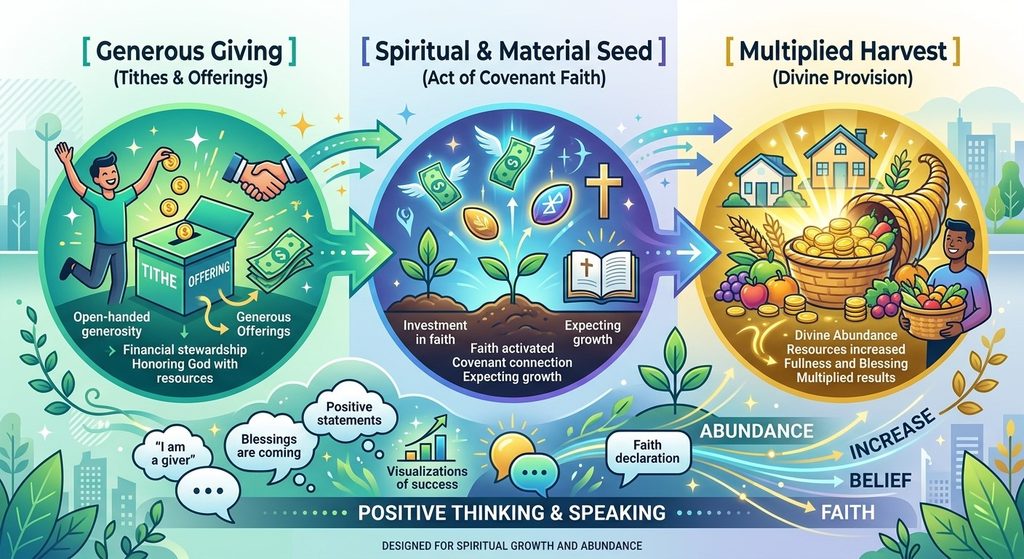
One of the most empowering aspects of prosperity teaching is its view of personal stewardship. Rather than seeing financial giving as an obligation or a loss, it is framed as a spiritual investment governed by the law of sowing and reaping.
Malachi 3:10 offers a famous divine challenge: “Bring all the tithes into the storehouse… and try Me now in this… if I will not open for you the windows of heaven and pour out for you such blessing that there will not be room enough to receive it.”
When believers practice “seed-faith”—giving cheerfully to church, missions, and community outreach—they actively participate in a spiritual economy. Generosity acts as a catalyst, opening doors for unexpected opportunities, career growth, and financial protection.
Generous giving is a intentional, faith-driven act of stewardship where an individual freely shares their financial resources, time, or talents to support others and advance spiritual work without expecting anything in return. Rather than being defined by a strict transaction, true biblical generosity stems from a heart of gratitude, recognizing that all material wealth ultimately comes from God and is meant to flow through a person to bless others.
Generous Giving Across Income Levels
- Modest Income / Limited Means: Biblical generosity is measured by proportion and sacrifice, not the size of the gift. In Mark 12:41–44, Jesus highlights the poor widow who put two small coins into the offering treasury, explaining that she gave more than all the rich because she gave out of her poverty rather than her surplus. Scripture also notes that “if the willingness is there, the gift is acceptable according to what one has, not according to what one does not have” (2 Corinthians 8:12).
- Middle & Moderate Income: For those with steady income, generosity is expressed through consistent stewardship, tithes, and planned offerings. In 2 Corinthians 9:7, the Bible guides believers to decide in their hearts what to give without regret or feeling forced, “for God loves a cheerful giver”. Additionally, Proverbs 3:9 encourages honoring the Lord with the first fruits of all wealth, placing giving as a intentional priority.
- High Income & Abundance: For those blessed with significant material resources, generosity comes with a responsibility to share openly and guard against materialism. 1 Timothy 6:17–18 instructs the wealthy not to be arrogant or place their hope in uncertain wealth, but to “do good, to be rich in good works, to be generous and ready to share”. When resources are abundant, generosity becomes a tool to bring joy, support the needy, and build lasting heavenly treasure (Luke 12:33–34).
4. The Creative Power of Words and Faith
Prosperity theology restores an active, dynamic role to personal faith. Faith is not a passive waiting game; it is an active trust that speaks and acts upon God’s promises.
Proverbs 18:21 states that “Death and life are in the power of the tongue.” By practicing positive confession—declaring health over sickness, and abundance over lack—believers align their speech with God’s intentions rather than being defeated by negative circumstances. When two or more come together in agreement (Matthew 18:19) to declare that “no weapon formed against them shall prosper” (Isaiah 54:17), it releases a powerful mindset of expectation and resilience.
5. Practical Empowerment and Global Impact
Beyond theology, the practical benefits of prosperity churches are evident in communities worldwide. In regions struggling with systemic poverty, this message provides a crucial psychological and spiritual lifeline:
- Breaking Generational Cycles: It instills a sense of worth, ambition, and dignity, encouraging individuals to pursue education, launch businesses, and seek career advancement.
- Fostering Life Discipline: Prosperity teaching strongly discourages destructive habits that drain personal finances—such as addiction, gambling, and reckless living—while promoting budgeting, hard work, and clean living.
- Funding Good Works: Wealth in the hands of believers is viewed as a tool for kingdom building. Prosperous individuals and churches are equipped to build hospitals, fund humanitarian relief, support orphanages, and resource global charitable endeavors.
Living in Covenant Abundance
Ultimately, the prosperity doctrine offers a compelling, action-oriented vision of faith. It calls believers out of passive resignation and into active covenant partnership with God. By recognizing God as a generous provider, declaring His promises over every challenge, and practicing bold generosity, millions have found the faith to transform their lives, support their communities, and live out God’s design for holistic abundance.